Skip to content
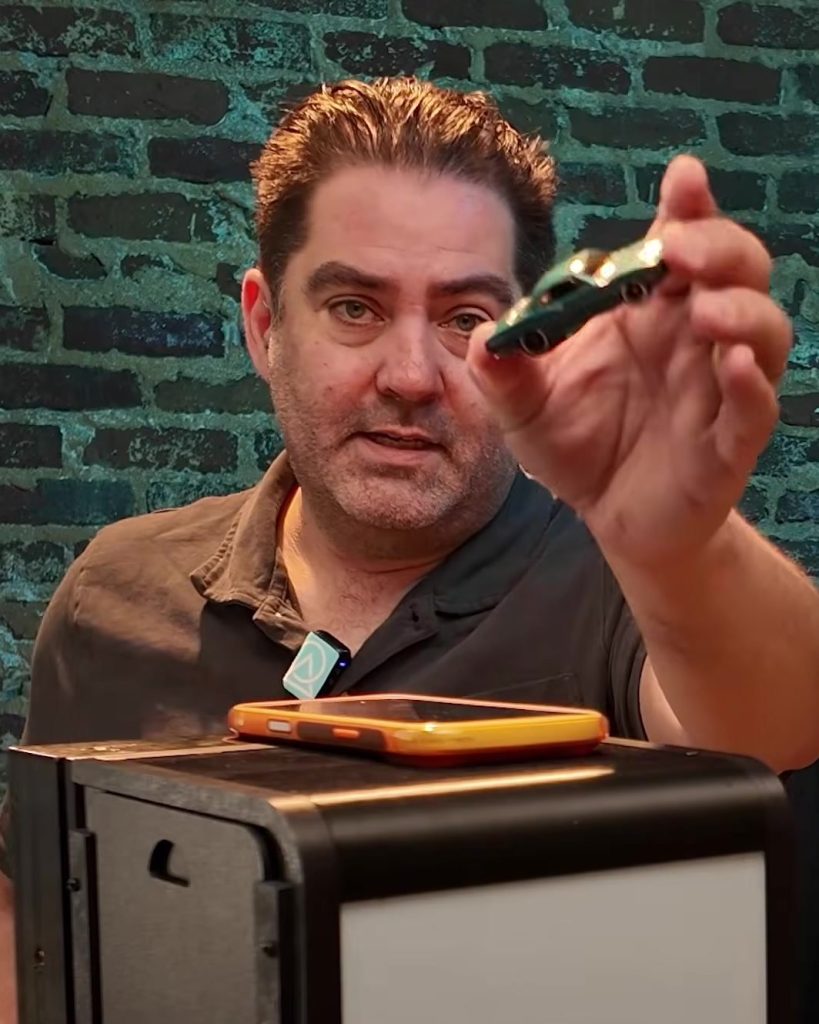
It was the first week of the Kickstarter, and I was living in front of a sliver of brick wall. I’d built a little production studio there, a couple of lights and the Halumin-C prototype on the bench, the spot where we’ve shot just about everything for the Halumin videos. Questions kept coming in, in private messages and in the comments, and I’d decided to answer them with little video clips so everybody could see the answers. I was working all day on them. For one, I picked up a Hot Wheels ’68 Plymouth Barracuda Formula S in deep metal-flake teal, held it up to the camera and showed what Halumin-C does with a car. This is Hot Wheels photography the way I wish it had always worked: one car, one phone, about twenty seconds.
The Barracuda went into the Halumin-C, my iPhone lying flat on top looking straight down. No softbox, no tent and no editing app, just a toy car photo coming up on the phone screen while I watched. Whether you’re shooting Hot Wheels pictures for Instagram, cataloging a collection or listing a Treasure Hunt on eBay, the problem is the same, and so is the fix.
More diecast setups: Diecast Car Photography With the Halumin-C.
Key Takeaways
- Lock exposure and focus first. In the short, the backdrop drops to black the moment AE/AF lock goes on, and the car is all that’s left.
- Shoot from above with about 3x zoom, so the car fills the frame without distorting the body lines (the short runs at 3.1–3.2x).
- Flip the car over. The baseplate carries the casting name, the maker and the year, which is exactly what collectors and buyers want to see.
- Keep the lid on and you can shoot in any room without dimming the lights. Take it off when you want an open, glowing look.
- For top-down shots with the lid on, use mostly the halo (sliders 3 and 4), then add a little axial light (slider 1) to fill the shadows.
- Blow the dust off first. Every speck shows on a black background.
Watch the Diecast Short
The short below is the whole shoot, start to finish, in 22 seconds. It’s a screen recording of my iPhone’s camera, so you’re seeing exactly what the phone saw, and with about 1,350 views it’s become our most-watched diecast clip. The phone was lying upside down on top of the light, which is why the camera controls read upside down.
Here’s what happens, second by second:
- 0:00–0:03: I hold up the Barracuda and load it into the Halumin-C.
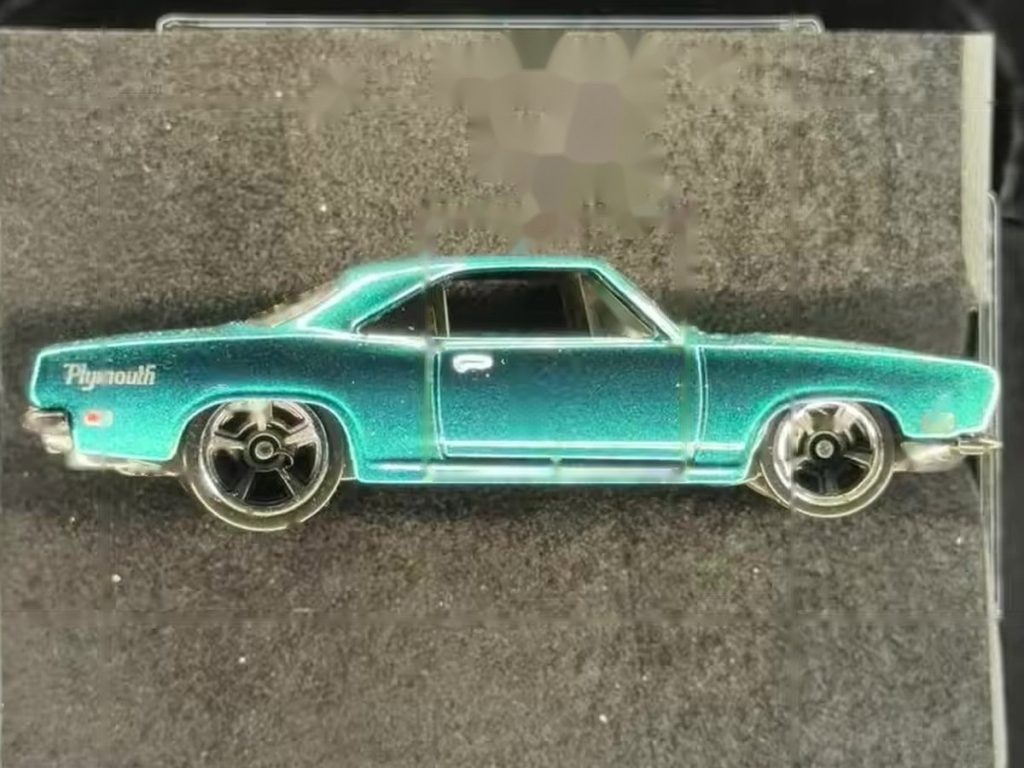
- 0:04–0:05: The phone’s first view. The car is lit, but the phone is still averaging the whole frame, so the backdrop around the car reads as gray texture.
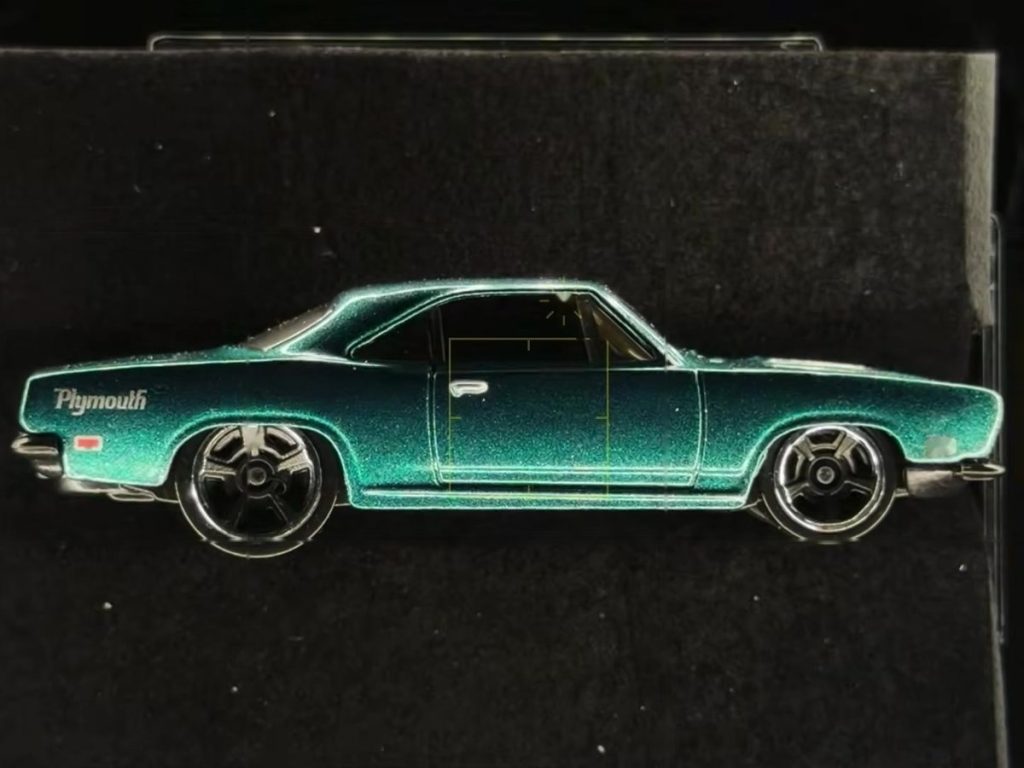
- 0:06–0:10: AE/AF lock goes on. The backdrop falls to black and the teal metal flake, the chrome-lipped wheels and the “Plymouth” script on the rear fender stand out.
- 0:11–0:13: I reach in and flip the car onto its roof.
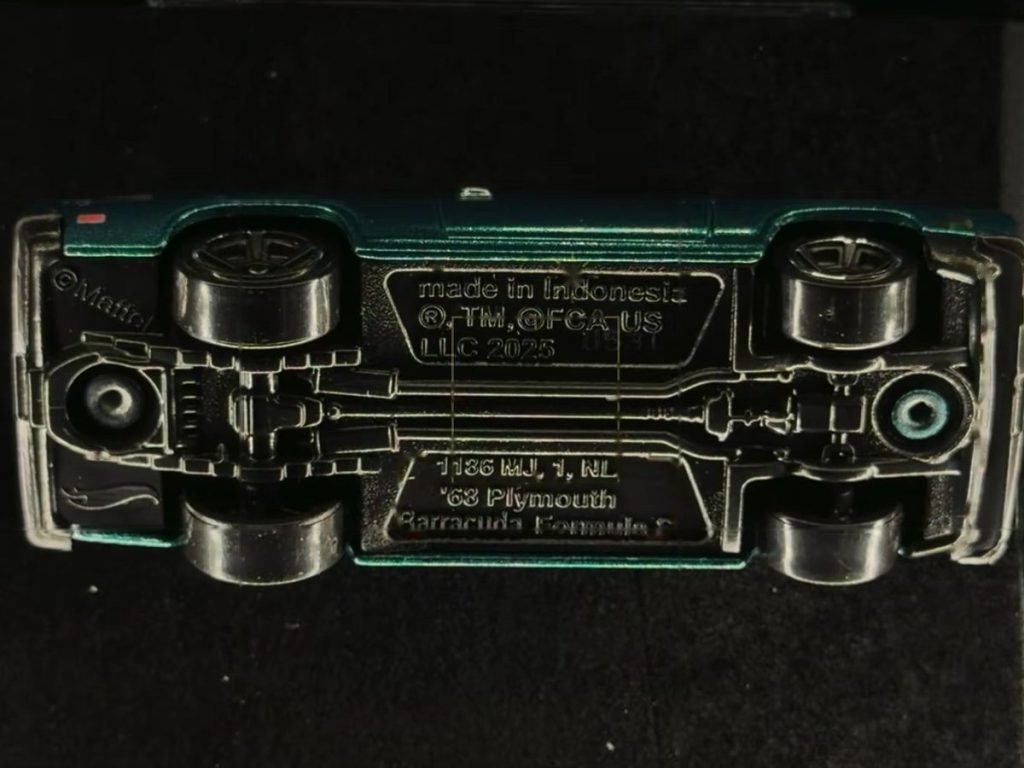
- 0:14–0:21: The baseplate comes up out of the dark as the light builds, until you can read every line of it: ’68 Plymouth Barracuda Formula S, made in Indonesia, © Mattel, FCA US LLC 2025.
A few days later I posted a captioned cut of the same clip. It closes on a shot of the Barracuda against a blue sky and an end card from our Kickstarter campaign.
Note: our Kickstarter was successful, and Halumin-C can now be pre-ordered on the Halumin store.
Why Hot Wheels Pictures Are So Hard to Get Right
A 1:64 car is a tiny pile of mirrors. Metal-flake paint, chrome wheels, clear or tinted windows and a glossy clear coat all reflect whatever is around them, so a normal room puts every lamp, window and ceiling light right onto the hood. Light from one side throws a hard shadow longer than the car. Light from everywhere, like a light tent, kills the reflections but flattens the body lines that make a muscle car look like a muscle car.
The size makes it worse. To fill the frame you have to get close, and up close a phone’s wide lens bends the proportions and puts your own phone and hand into the reflections. And because the car is small and dark against a big frame, the phone’s auto exposure keeps guessing: brighter, darker, brighter.
Good diecast car photography needs light that wraps around the body, shows the paint without reflecting the room, and stays put while you shoot.
How to Photograph Hot Wheels, Step by Step
- Put the lid on. With the lid on you get great images in any room, without dimming the lights.
- Dust the car. Wear cotton gloves to keep fingerprints off the paint, and give it a few puffs from an air blower (see What Else You’ll Need below). On a black background, dust looks like stars.
- Load the car. Place it in the Halumin-C with the side you want to show facing up toward the phone.
- Place the phone and frame. Lay the phone on top, looking down, and zoom to about 3x so the car fills most of the frame.
- Lock exposure and focus. Press and hold on the car until AE/AF lock appears (Android phones have the same idea). Watch the background go black.
- Build the light. For a top-down car shot with the lid on, use mostly sliders 3 and 4, the Open Cylindrical™ halo, which wraps around the body and brings out the lines and the paint flake. Then add a little of slider 1, the axial light, to fill the shadows. Watch the screen as you go.
- Flip it for the baseplate. Collectors and buyers want the casting name, the year and the country, so shoot the bottom too.
- Shoot and post. Take the photo or record a short clip, check it on the phone and post it. No editing needed.
What Else You'll Need
Two small things I keep next to every shoot:
- Archival Methods cotton inspection gloves: keep fingerprints off glossy paint, chrome and clear blister plastic while you load and flip the car.
- WOLFBOX MF100 air blower: on a black background, dust looks like stars, so a few puffs before each shot save you from retouching.
As an Amazon Associate I earn from qualifying purchases.
Technique: What the Short Teaches About Toy Car Photos
Exposure first, light second. The single biggest change in the short isn’t the light, it’s the lock. Before AE/AF lock, the phone tries to make the whole frame medium gray, so it brightens the dark backdrop and the car gets lost in it. Lock it on the car and the phone stops guessing. Then every change you make to the light is a real change you can see. Apple’s own guide to setting up your shot explains the press-and-hold lock.
Top-down is a real angle for cars. Shooting straight down makes a clean, catalog-style profile: the whole roofline, every wheel, nothing hidden behind a fender. It’s also the easiest angle to repeat, so a whole collection shot this way looks consistent on a page or in a listing.
The baseplate is part of the car. For collectors, the bottom of a Hot Wheels car is where the facts live: the casting name, the maker, the country and the year. When the light came up on the Barracuda’s chassis in the short, the raised text, the exhaust detail and the rivets all read clearly. If you sell, a sharp baseplate photo answers questions before a buyer asks them.
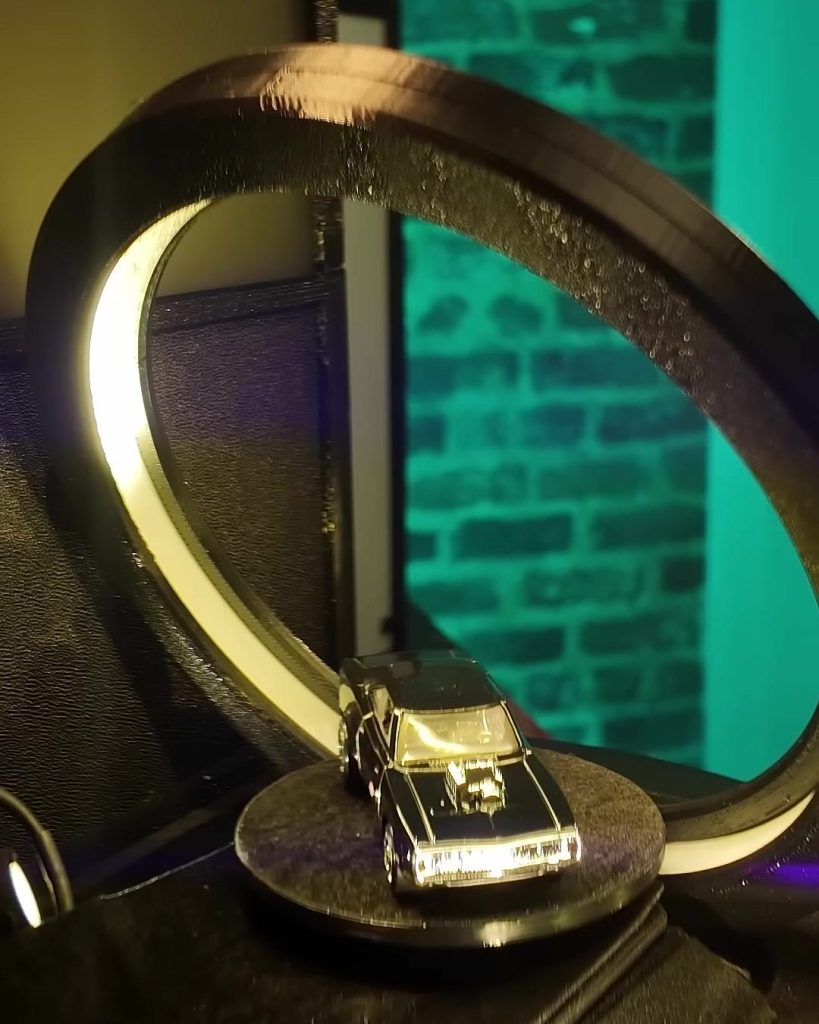
Lid on, lid off. With the lid on, the room’s own lights stay out of the paint, and the halo-plus-a-little-axial setting does the rest. Take the lid off and you get a different look: in our Kickstarter intro, a black muscle car sits on the pedestal inside the glowing halo, with the studio’s teal backdrop behind it. Dimming the room helps when the lid is off.
Tip: Shoot the Car Twice, Top and Bottom
Get in the habit of shooting every car twice, once right side up and once flipped. It takes a few seconds in Halumin-C, because the car never leaves the light, and it means your photo of each car shows the casting name with it. If you’re cataloging a big collection, that second shot is your label.
The Car in the Short: A '68 Plymouth Barracuda Formula S
Hot Wheels and the Barracuda go back to the very beginning. When Mattel co-founder Elliot Handler wanted a line of toy cars to take on Matchbox, he insisted they look authentic and roll fast, and he brought in Harry Bradley, a designer from Chevrolet, to lead the design team, as The Strong National Museum of Play tells the story. The first sixteen cars, released in 1968 and painted in candy-colored Spectraflame, included a Custom Barracuda. Mattel itself credits the brand to a team that included a rocket scientist and a car designer.
The real car was Plymouth’s answer to the Mustang. The second-generation Barracuda arrived for 1967 as a fastback, a convertible and a notchback, with V-8s from 273 to 383 cubic inches and the Formula S performance and handling package. Hagerty calls the 340 Formula S the best overall balance of performance and drivability of the bunch, and counts 45,412 Barracudas built for 1968.
The Hot Wheels ’68 Plymouth Barracuda Formula S casting dates to 2013 and is credited to Hot Wheels designer Phil Riehlman, according to the collector database Wheel Wonderland. With its metal-flake dark teal paint, black base and 2025 date, ours appears to be the version from the 2025 Fast & Furious 5-pack, a set of five cars inspired by the film franchise, though I can’t say for sure. That pack also includes a black ’70 Dodge Charger R/T, and the black Charger in our Kickstarter intro may well be that car.
Our Kickstarter Intro Short: Coins, Watches and Cars
This one is mostly about coins, but the cars sneak in. It runs through the problems collectors fight every day (weird reflections, washed-out details, hard shadows), shows a lavender muscle car next to a watch under “watches and collectibles,” and near the end shows the prototype’s sliders and the black Charger in the halo. It was made for the Kickstarter launch, and its title still asks you to find us on Kickstarter. (YouTube’s automatic captions hear “Halumin-C” as “Illumisee.” It’s Halumin-C.)
Note: our Kickstarter was successful, and Halumin-C can now be pre-ordered on the Halumin store.
How Halumin-C Makes Hot Wheels Photography Simple
Halumin-C is lighting built for small collectibles: coins, watches, die-cast cars and more, with the camera or phone you already own. It combines three lighting tools, an axial light, a tone light and the Open Cylindrical™ halo, on simple slider controls. The production version has four sliders. For top-down car shots with the lid on, my recommended setting is mostly sliders 3 and 4 (the halo), plus a little of slider 1 (the axial light) to fill the shadows. With the lid on, you get great images in any room, with no need to dim the lights. Take the lid off for video, open looks or quick swaps, and dimming the room helps. The shorts on this page show the handmade prototype; the production version is on its way. For bigger toys, like figures and LEGO scenes, there’s the Halumin H18.
Pre-Order Halumin-C
Pre-orders lock in a $429 discounted pre-order price, and shipping is anticipated in Q1 of 2027.
Need one sooner? The I Need It Now Edition ($2,989, non-returnable) includes a handmade, made-to-order functional copy of the prototype that typically ships in 2–4 weeks, plus a production Halumin-C when they ship.
Frequently Asked Questions
How Do You Take Good Pictures of Hot Wheels?
Use light that wraps around the car instead of a single lamp, shoot with your phone at about 3x zoom, and lock exposure and focus on the car before you adjust anything. In Halumin-C, keep the lid on so room lights don’t show up in the paint, and use mostly the halo (sliders 3 and 4) with a little axial light (slider 1) to fill the shadows.
Can I Photograph Hot Wheels With an iPhone?
Yes. Everything in our diecast short is an iPhone screen recording. Lay the phone on top of the Halumin-C, zoom to about 3x, press and hold to lock exposure and focus, then build the light. Android phones work the same way.
Why Do My Toy Car Photos Have Glare?
Shiny paint and chrome reflect the room, so every lamp and window ends up on the car. Blocking room light (the Halumin-C lid does this) and lighting the car with soft, wrapping light removes most of it.
Should I Photograph the Bottom of a Hot Wheels Car?
If you collect or sell, yes. The baseplate shows the casting name, the maker, the country and the year, so a clear shot of it identifies the car and answers buyers’ questions.
Does Halumin-C Work for 1:64 Diecast Cars?
Yes. Halumin-C is made for coins and small collectibles, including 1:64 diecast cars like the Hot Wheels shown in our shorts.
When Does Halumin-C Ship and How Do I Pre-Order?
Pre-orders are $429 (discounted), with shipping anticipated in Q1 of 2027. Order on the Halumin store. The I Need It Now Edition ($2,989, non-returnable) ships a handmade prototype in about 2–4 weeks, plus a production unit later.
Summary: One Car, One Phone, Twenty Seconds
A ’68 Barracuda, an iPhone lying on top of the light and one press-and-hold for AE/AF lock: that’s the whole recipe in the short, top and bottom, with no editing. For more small-subject lighting, see How to Use Your Halumin C, How to Photograph Coins in Slabs and, for watches, Slay Your Watch Photography Lighting with Halumin. If toy scenes are more your thing, try our toy photography ideas with a UFO or black-on-black 3D printed toy photography.
Here’s the behind-the-scenes clip from that Kickstarter week, a quick tour of the little studio where the diecast short was made. Tell me in the site chat which car you want to see in Halumin-C next.
Note: our Kickstarter was successful, and Halumin-C can now be pre-ordered on the Halumin store.
See Halumin in person: catch our live lighting device demos at an upcoming coin show or event.
Hot Wheels and Matchbox are trademarks of Mattel. Halumin is not affiliated with or endorsed by Mattel.