Skip to content
Coin shows are like that. If you stand at a table long enough, a family story walks up and sets itself down in front of you. So right there on the show floor, with the lid on and a phone on top, we worked out how to photograph a coin die: a big chunk of metal with pitting and a little rust, plus fine, intricate engraving that the Halumin-C was designed to bring out. As he put it: “I’ve never showed it to anybody that didn’t say, ‘Wow.’”
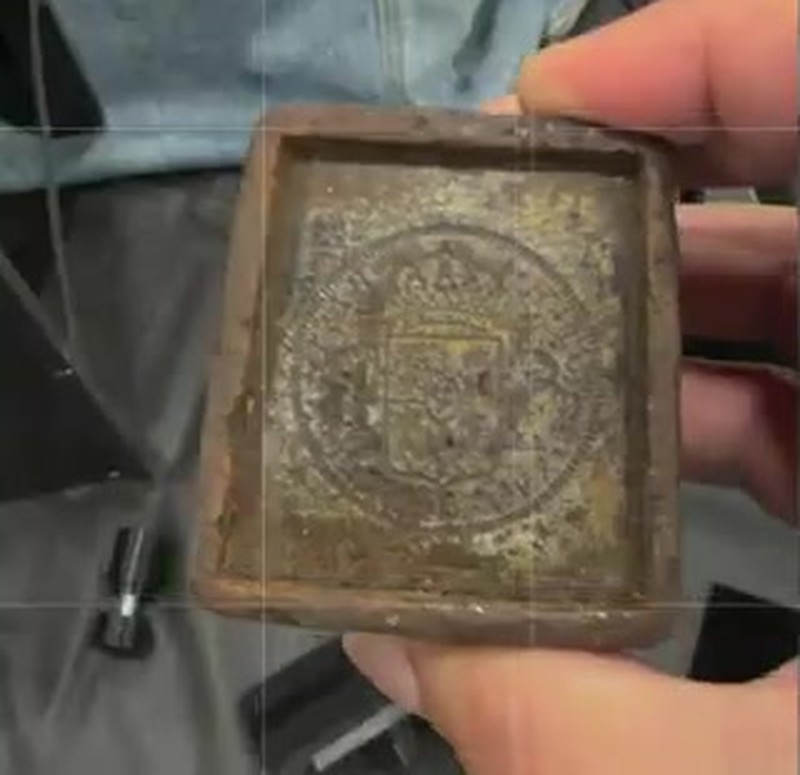
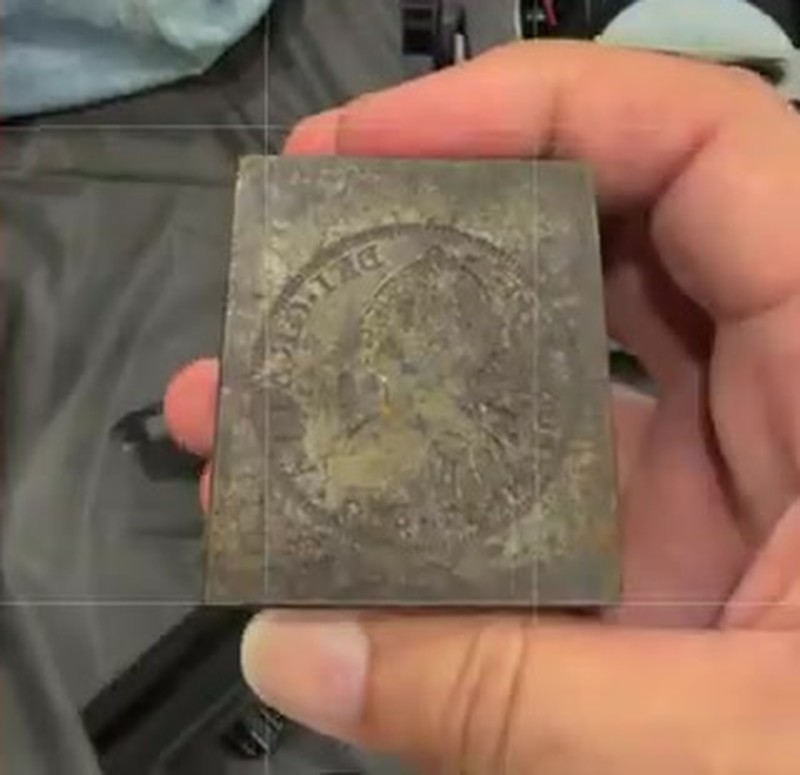
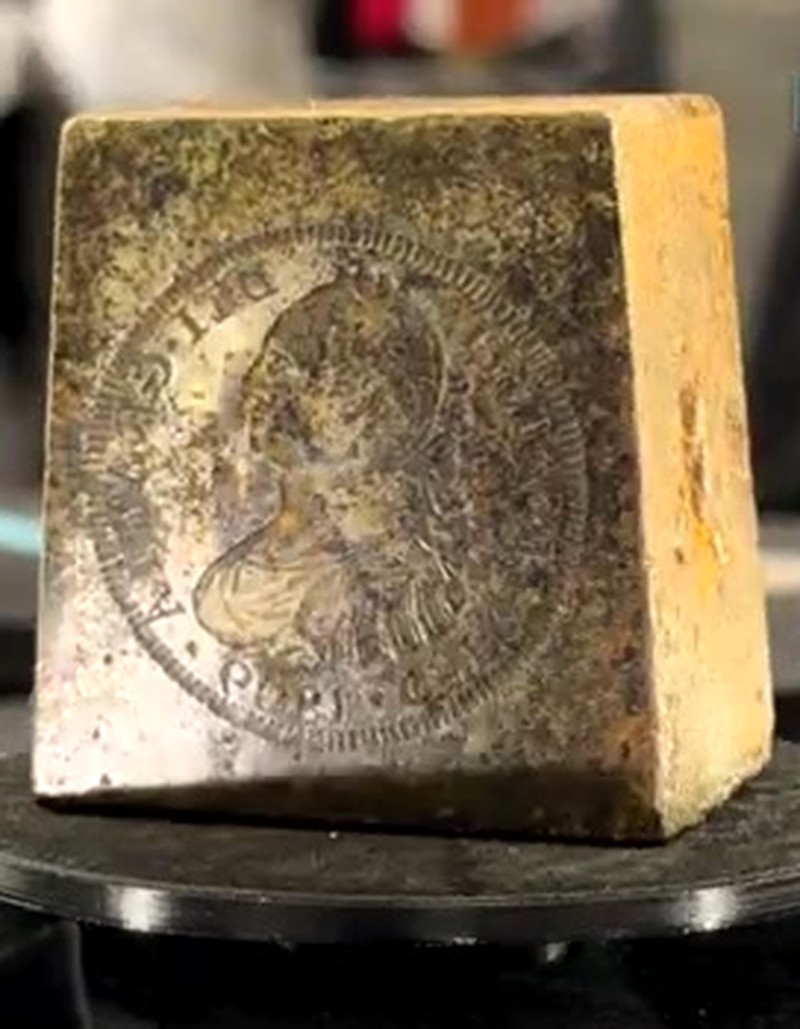
The two dies in hand under the show-floor lights: one with the crowned shield, one with the king’s portrait. The owner says they are a matched obverse and reverse. Phone photos shown in the video; the faint lines are the phone camera’s grid.
Key Takeaways
- A die is a coin in reverse. Its design is cut into the metal as a mirror image, so the detail lives in grooves and recesses. Grazing light is what makes it readable.
- Lid on, shoot anywhere. With the lid on, you get great images in any room, even on a bright show floor, with no need to dim the lights. You can also use it with the lid off, where dimming the room helps.
- Heavy is fine. We pressure-tested the turntable with a heavy block of metal, and it still rotated.
- Same tool, any phone. We got great shots on the owner’s phone and on mine.
- From a metal block to a small coin, fast. Switching from the heavy die to a 1915 gold coin in a cardboard 2×2 was quick and easy.
Watch: Photographing a Collector’s Coin Die
The 2-minute video was filmed at our table at the Cincinnati show (June 5–6, 2026, Sharonville Convention Center). You’ll see the dies in hand, the owner explaining how, he says, they were authenticated, the Halumin-C photos, the turntable test and a bonus 1915 gold coin in a cardboard 2×2.
Video: Photographing a collector’s coin die with Halumin-C and an iPhone at the Cincinnati coin show (2:08).
Why a Coin Die Is Hard to Photograph
Age and storage add a second problem. Rust and pitting create bright specks and dark holes everywhere, competing with the engraving for attention. The goal is to light the edges of the cuts so the design reads clearly, without making the corrosion the star. This is where wraparound light, angled low, does its job: it skims across the face, every groove casts a thin shadow, and the engraving reads like a drawing.
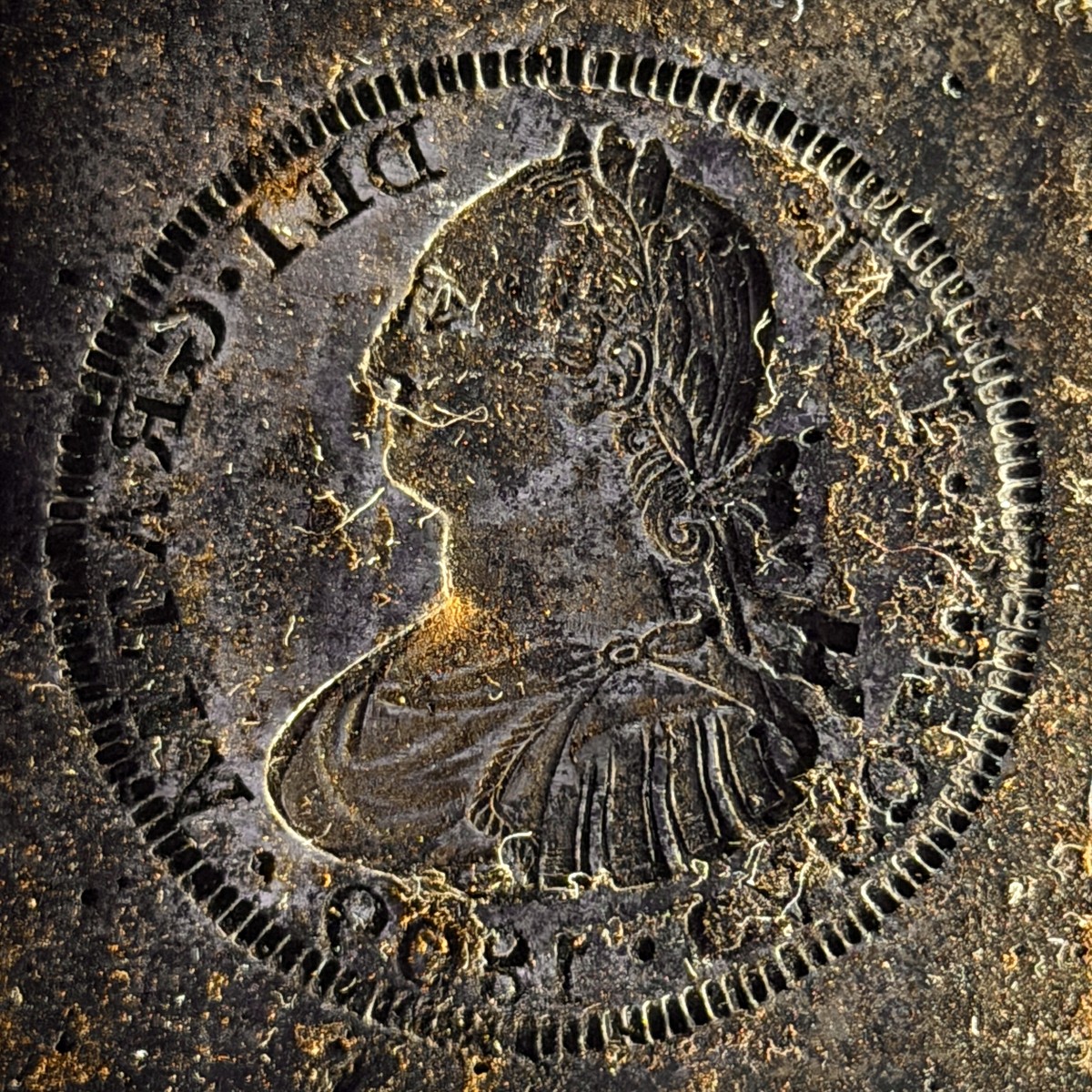
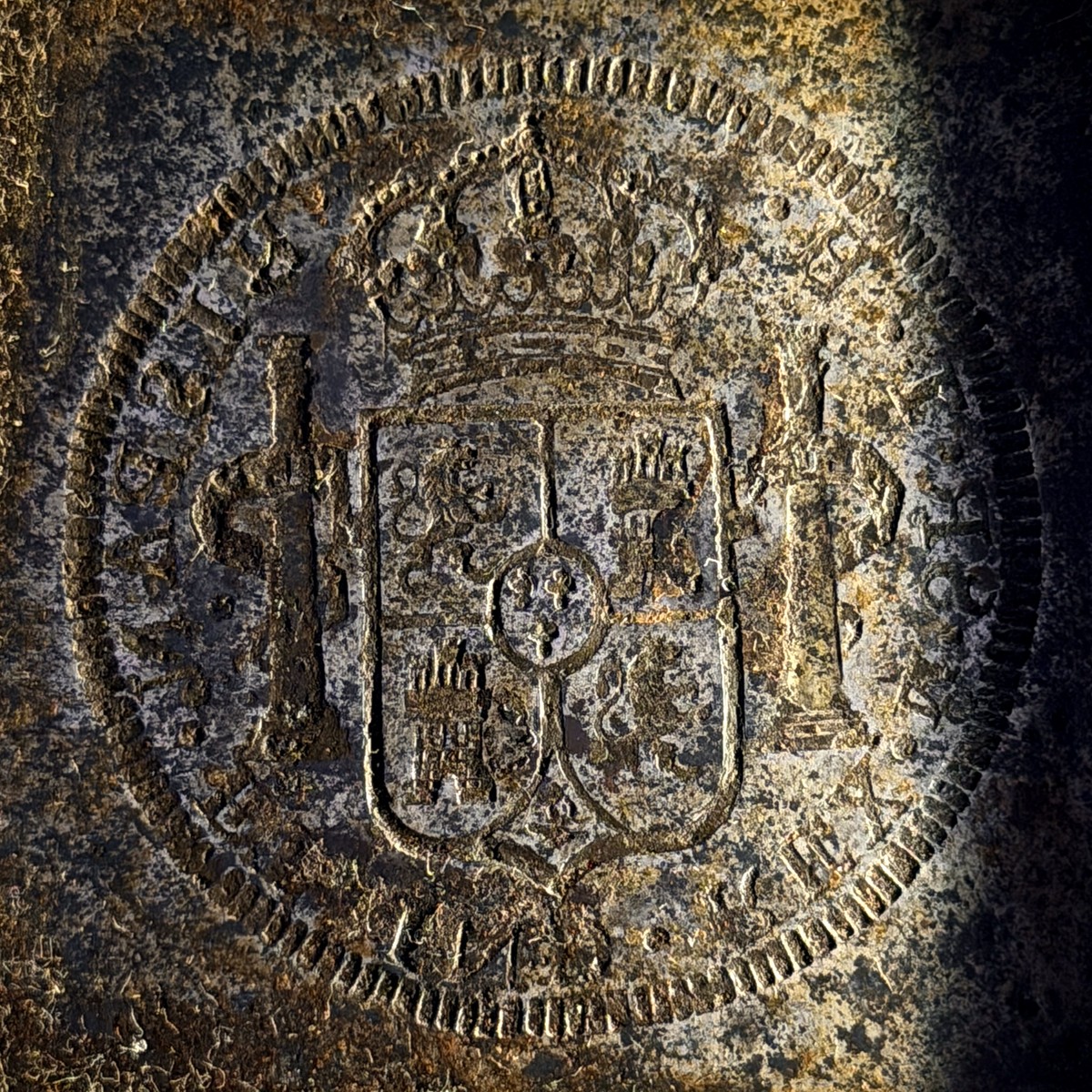
The obverse die (left), with the portrait cut in reverse so it faces left, and the reverse die (right), with the crowned shield, which the owner says is its matching pair. Both photographed at the show in Halumin-C with an iPhone 17 Pro Max; color balanced to match each other (global color and exposure only), the dies themselves are untouched.
How to Photograph a Coin Die, Step by Step
- Put the lid on. With the lid on, you get great images in any room, even on a bright show floor, so you don’t need to dim the lights.
- Set the die on the turntable, face up. Center the engraved face under the camera opening. A heavy block is fine; the turntable held this one and still rotated.
- Phone on top, frame the face. Zoom until the design fills the frame, then press and hold to lock exposure and focus (AE/AF lock on an iPhone; Android works the same way).
- Start with the halo. The Open Cylindrical™ halo wraps light around the face and brings out the edges of every groove.
- Turn the die, not just the light. Rotate the turntable a little at a time and watch the engraving sharpen and fade as the light crosses the cuts.
- Add a touch of the tone light or axial light. Use just enough to show the real surface and color, then stop before the rust takes over.
- Shoot both dies the same way. If you shoot the obverse and reverse with the same settings, the pair looks consistent.
- Check on the phone and share. No editing needed.
Technique: The Turntable Test and a Quick Switch to a Coin
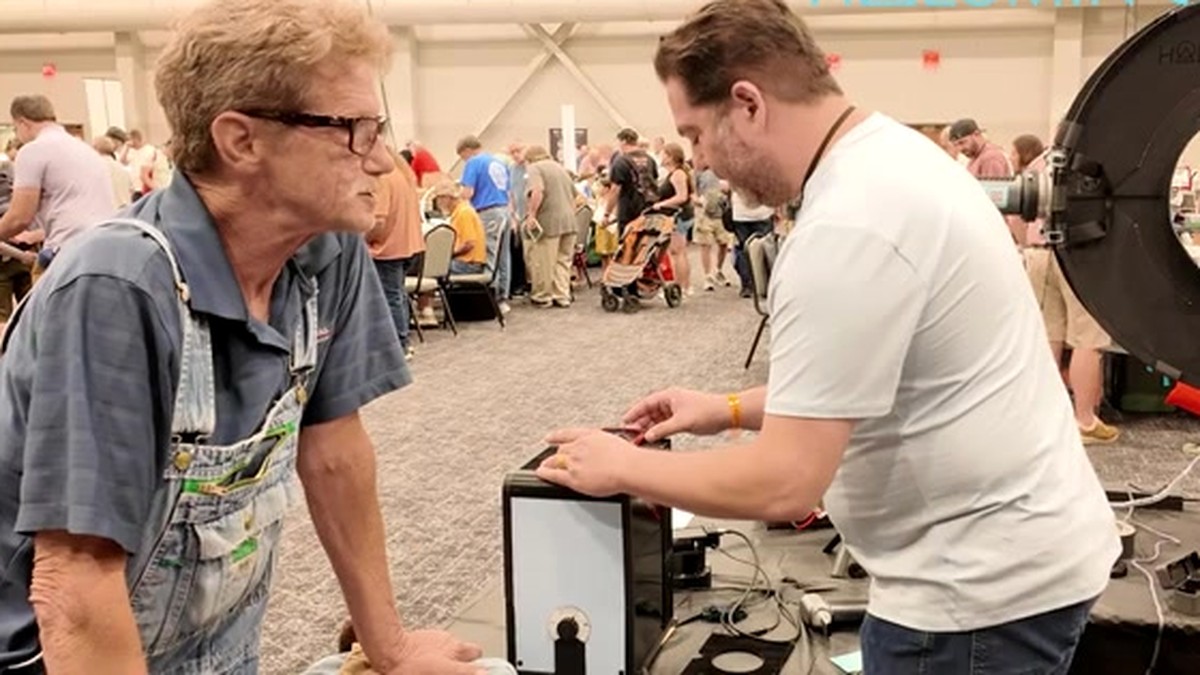
Once we had the shots, on his phone and then on mine for this video, I was curious whether that heavy block of metal could actually rotate on the little turntable inside the Halumin-C. So we tested it. It did. Being able to turn a heavy subject without lifting it is what makes the raking-light step practical: you set the light once and turn the object until the engraving pops.
As a bonus, another coin came out to be photographed: a 1915 Indian Head $2½ gold coin in a handwritten cardboard 2×2. Going from that big block of metal to a little coin was quick and easy. The coin stayed in its holder, staples and all, and the Halumin-C lit the gold through the window of the flip. If you store raw coins this way, cardboard flips such as Whitman’s Cowens® Cardboard 2″ x 2″ Coin Flips – Cents fold over the coin and staple shut, and you can photograph them without taking the coin out.
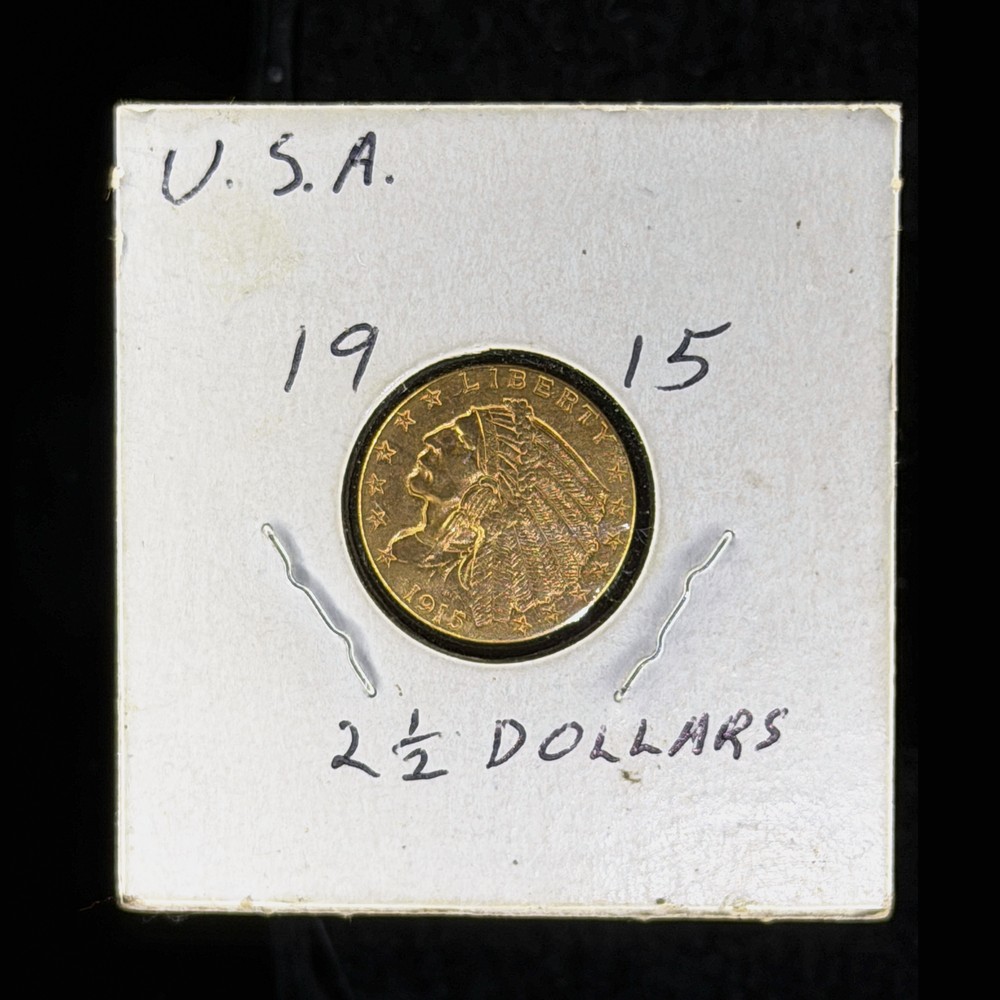
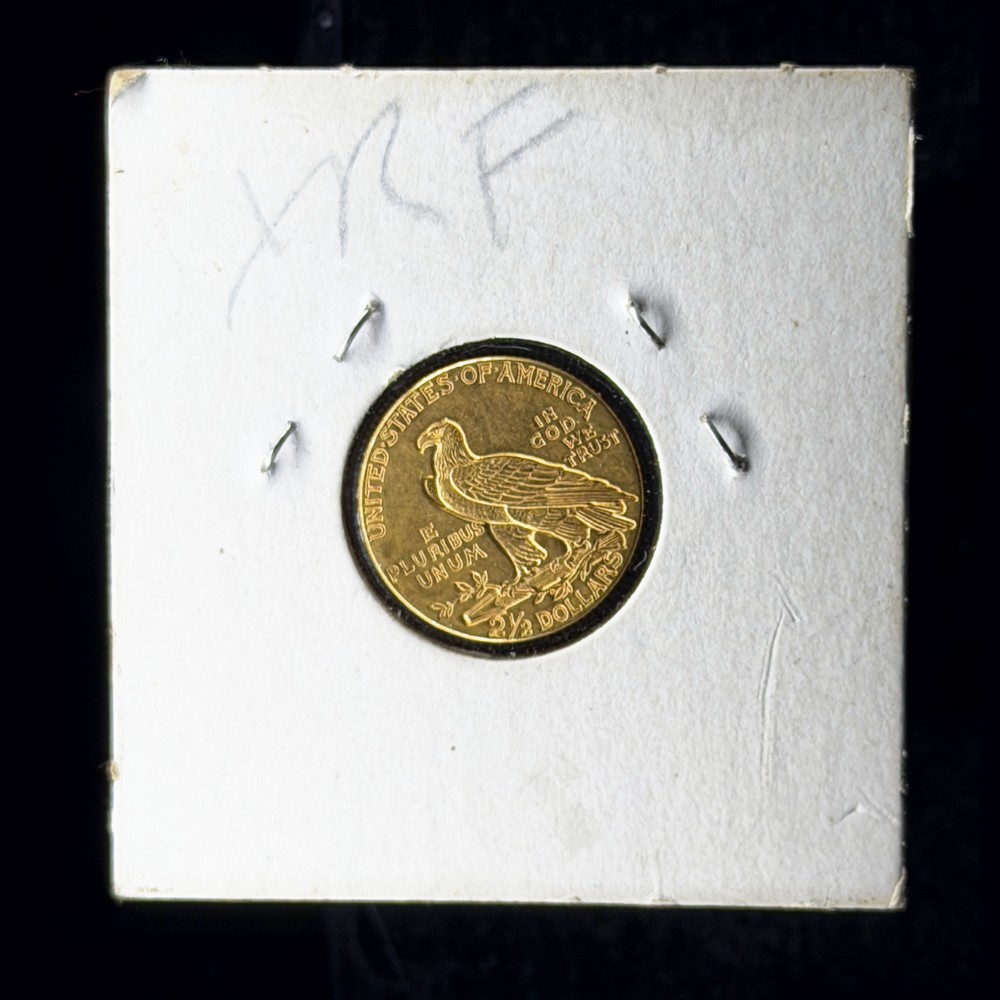
A 1915 Indian Head $2½ gold coin, obverse (left) and reverse (right), photographed in its cardboard 2×2 in Halumin-C at the show with an iPhone 17 Pro Max. The handwriting and staples are on the holder; the two photos are color balanced to match (global color and exposure only), the coin and flip are untouched.
Tip: Photograph the Die and a Coin It Struck Together
The owner says his dies were authenticated by matching them to coins: according to him, under a 100-power microscope, marks on the dies lined up with marks on surviving coins. We couldn’t verify that, but the method is worth borrowing. If you ever document a die, an ancient punch or a hub, shoot it with the same light as a coin it struck. Side-by-side images make the match easy for an expert to see, and they make a much better story for everyone else.
The Story Behind the Die: Mexico City, King Charles IV and “Two Bits”
The 1800 2 reales features Charles IV (CAROLUS IIII DEI GRATIA, in the Latin of the legend) on one side and the crowned Spanish arms between the Pillars of Hercules on the other. The designs cut into these dies show that type: a draped, laureate bust and a crowned shield flanked by a pillar. Silver like this traveled far beyond Mexico. The 8 reales, or “Spanish dollar,” was the model for the U.S. dollar, and Spanish and Mexican silver stayed legal tender in the United States until 1857, according to the Smithsonian’s National Museum of American History. A 2 reales was a quarter of that dollar, which is why, as the American Numismatic Association’s Money Museum notes, Americans still call a quarter “two bits.”
The coins are collectible but obtainable. As the video notes, the original coins trade for hundreds of dollars each; a dealer listing shown in the video asks $527.93 for one, and a PCGS MS-62 example brought $1,000 at a Stack’s Bowers auction in February 2026. A die is a different kind of object. Mints usually defaced or destroyed old dies so they couldn’t strike more coins, which is why the question in the video is so interesting: how do you value a tool that could make more coins right now? According to the owner, an insurance appraisal told him to insure it for between $800,000 and $1.3 million. That’s his figure.
We couldn’t verify the owner’s claims about the dies’ history, authenticity, date, pairing or value.
The Bonus Coin: A 1915 Indian Head Quarter Eagle
The 1915 gold coin from the bonus segment is a fitting partner for a die. The Indian Head quarter eagle, designed by Boston sculptor Bela Lyon Pratt and struck from 1908 to 1929, was the first U.S. coin to carry an incuse design, according to PCGS. Its chief and eagle are sunk into the surface instead of raised above it. The idea behind Pratt’s incuse design came from Dr. William Sturgis Bigelow, a Boston physician who admired the sunken relief of ancient Egyptian art, and Theodore Roosevelt backed it. Critics in 1908 worried that the recesses would collect dirt and germs. As on a die, the detail on an incuse coin lives in the recesses, which is exactly where low, wraparound light helps.
How Halumin-C Makes Small-Object Photography Simple
Halumin-C makes coin photography simple with the camera or phone you already own. It works just as well on watches, die-cast cars and small collectibles, and, as this video shows, on a heavy coin die. For larger subjects like products, food and museum artifacts, there’s the Halumin H18. Halumin-C combines three lighting tools. Slider 1 is the axial light. Slider 2 is the tone light, a sliding focused spotlight for toning and luster. Sliders 3–4 control the Open Cylindrical™ halo for texture and depth. With the lid on, you get great images in any room, without dimming the lights. You can also use it with the lid off, where dimming the room helps. And because the detail comes from light, the images are real, not AI-generated.
Pre-Order Halumin-C
Pre-orders lock in a $429 discounted pre-order price, and shipping is anticipated in Q1 of 2027.
Frequently Asked Questions
How Do You Photograph a Coin Die?
Light it at a low, wraparound angle so the light skims across the engraved face and every groove casts a thin shadow. Use only a little frontal light. With Halumin-C, put the lid on, set the die on the turntable, lock exposure and focus on your phone, start with the halo, and rotate the die until the engraving sharpens.
Why Does the Design on a Coin Die Look Backward?
A die is a mirror image of the coin it strikes. The design is cut into the metal in reverse, so the portrait faces the other way and the lettering reads backward. When the die strikes a blank, the image comes out the right way around and raised.
How Can You Tell If a Coin Die Is Original?
Experts compare the die with coins it struck. The owner in this video says his dies were examined under a 100-power microscope and matched to marks on surviving coins; we couldn’t verify that. For anything valuable, get an opinion from a recognized expert or grading service.
Can Halumin-C Handle Heavy Objects Like a Coin Die?
Yes. We pressure-tested the turntable with a heavy metal die block, and it still rotated. For larger objects, the Halumin H18 is the better fit.
Can I Photograph a Coin in a 2x2 Holder?
Yes. Halumin-C photographs coins in their holders, so a raw coin can stay in its cardboard 2×2 while you shoot it. In the video, we photographed a 1915 gold coin that way, through the window of its stapled flip. Cardboard flips for cent-size coins, such as Whitman’s Cowens® Cardboard 2″ x 2″ Coin Flips – Cents, fold over and staple shut.
When Does the Halumin-C Ship and How Do I Pre-Order?
Summary: Every Coin Show Has a Story
A collector’s coin dies and the family story he tells about them, photographed with one tool and a phone, with no editing. The interesting stories we hear at coin shows are worth sharing, and I’ll keep sharing them. From the same Cincinnati show, here’s a collector who has spent decades building a toned coin collection:
For more, see How to Photograph Toned Coins, How to Photograph Coins with an iPhone and How to Use Your Halumin C. Have a die, a hub or an odd piece of numismatic history you’d like to see under the light? Tell me in the site chat.
Want to see it in person? We’ll be at the Whitman Baltimore Coin & Currency Expo, November 12–14, 2026, at the Baltimore Convention Center (Halls A, B and C, One West Pratt Street). Public admission is free. Come find us, bring a coin, a die or another small treasure, and try Halumin-C yourself.
See Halumin in person: catch our live lighting device demos at an upcoming coin show or event.